Category: BIOS Reporter
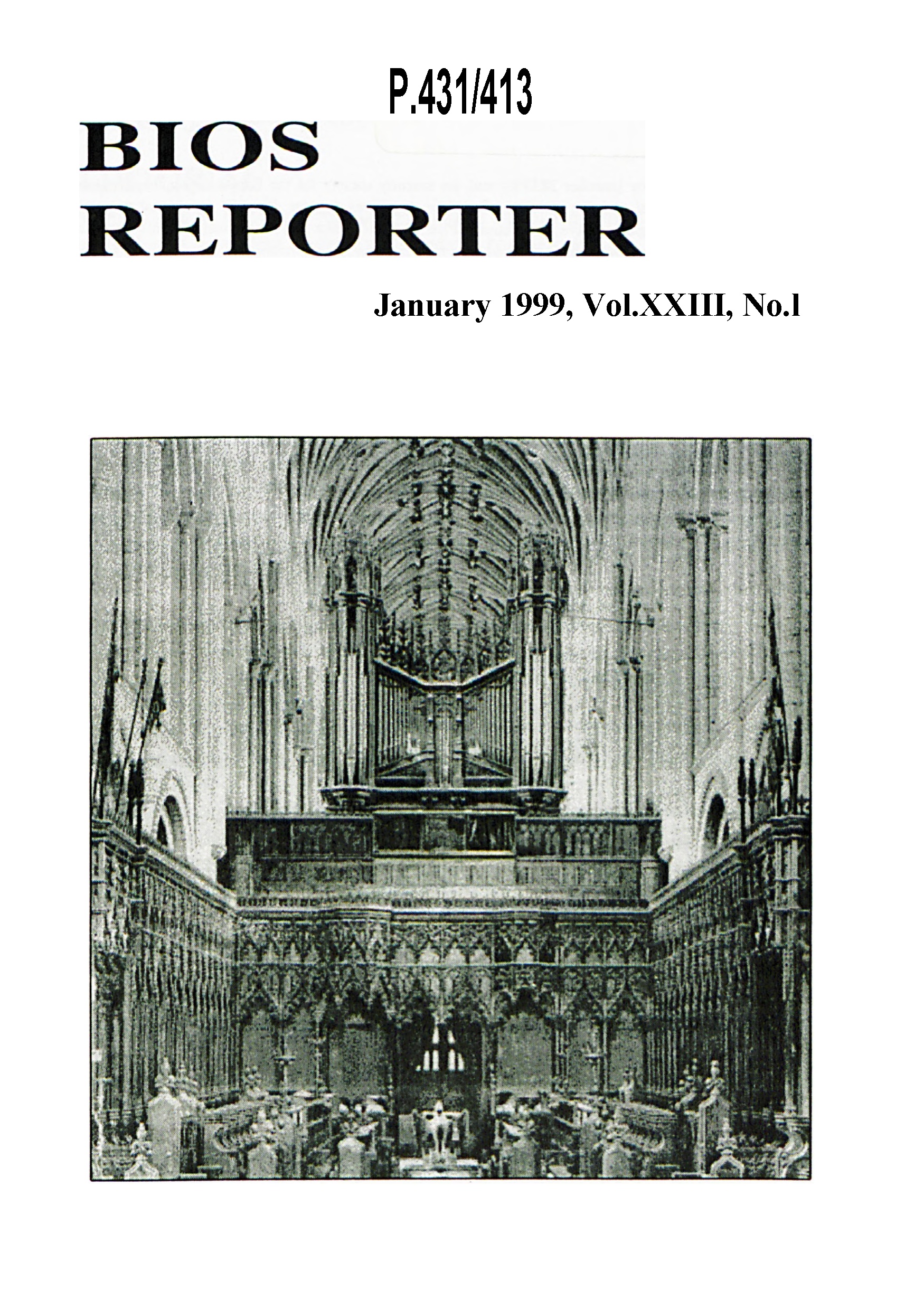
BIOS Reporter – Volume 23, No.1 – January 1999
1999 will be an important year in the political life of the United Kingdom, for it will mark the establishment of devolved power to Northern Ireland, Scotland, and Wales. The distinctive characters of these parts of the United Kingdom will be given some opportunity to express themselves. This seems to be an appropriate cue to…
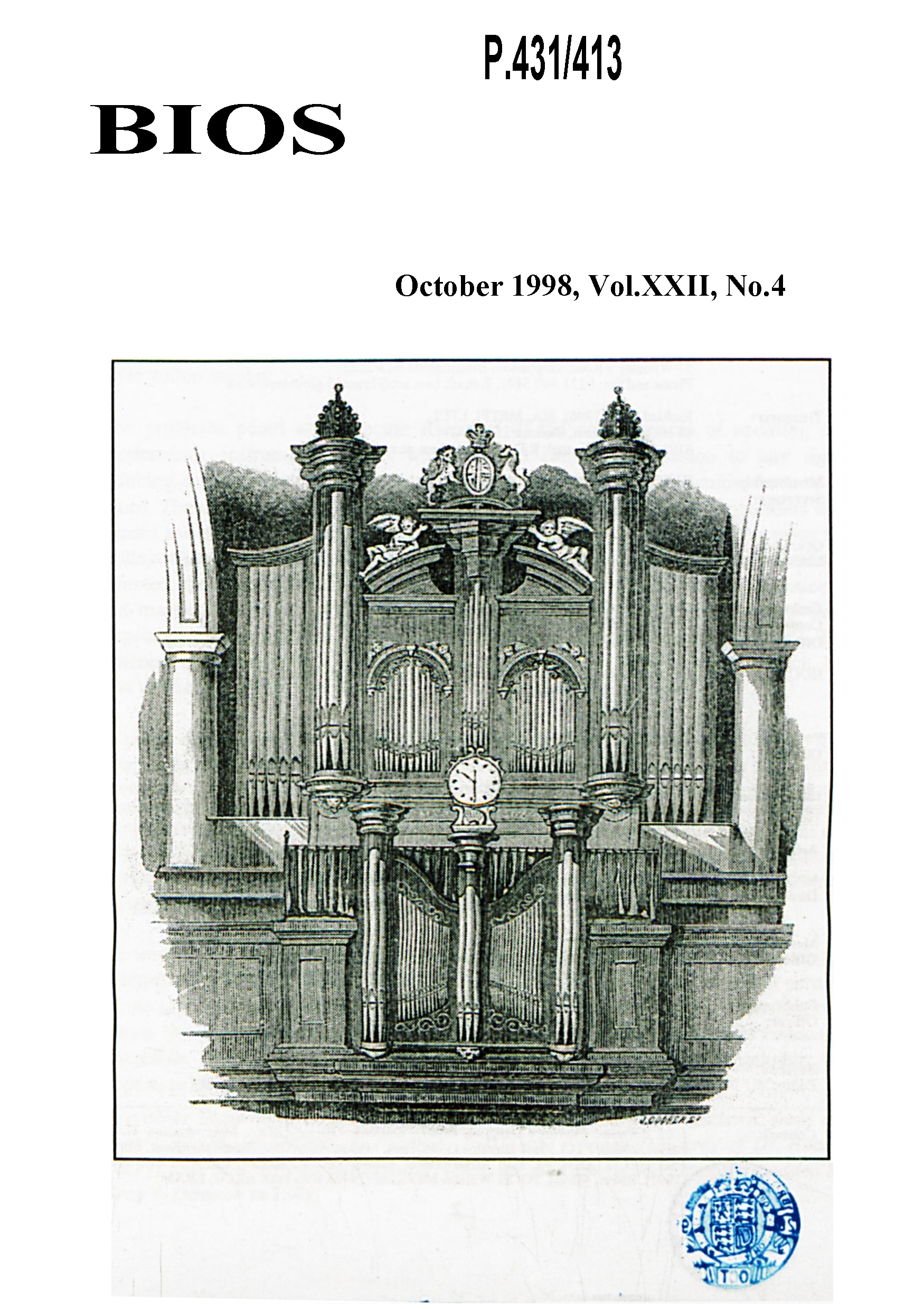
BIOS Reporter – Volume 22, No.4 – October 1998
For over a century the ‘Snetzler’ organ in St. Margaret’s Church, Kings Lynn, Norfolk, has been an unhappy marriage of two quite disparate schools of organ building; a substantial amount of eighteenth century Snetzler pipework and case cohabiting uncomfortably with a late nineteenth century Wordsworth structure, chests and considerable tonal additions. All of the material…
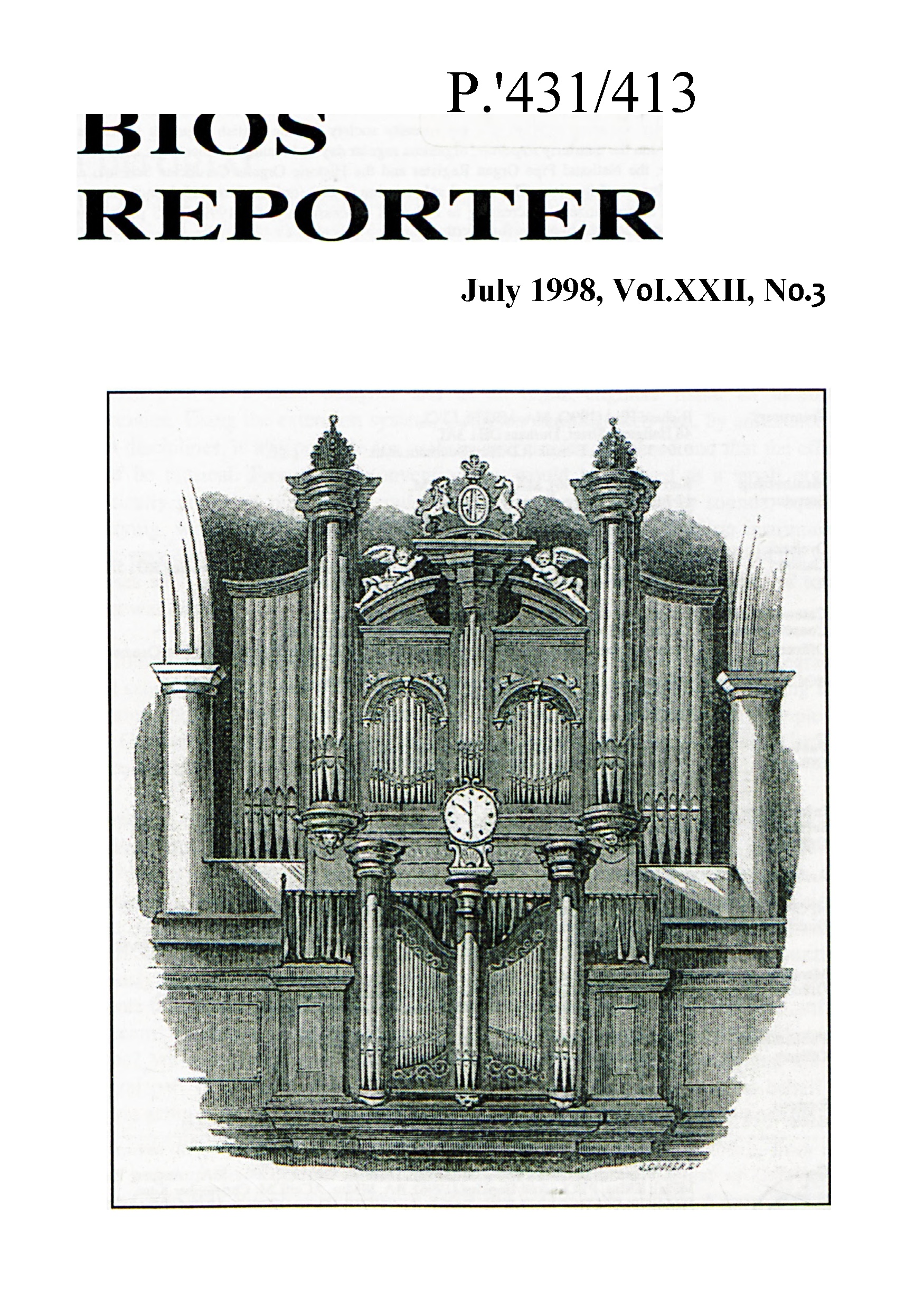
BIOS Reporter – Volume 22, No.3 – July 1998
The inclusion of papers about the work of John Compton at the forthcoming Bath Residential Conference and the November BIOS Day Conference is welcome recognition of an organ builder who, while pursuing a line of design and construction that is latterly seen to have had shortcomings, did it with a sense of conviction and surefootedness…
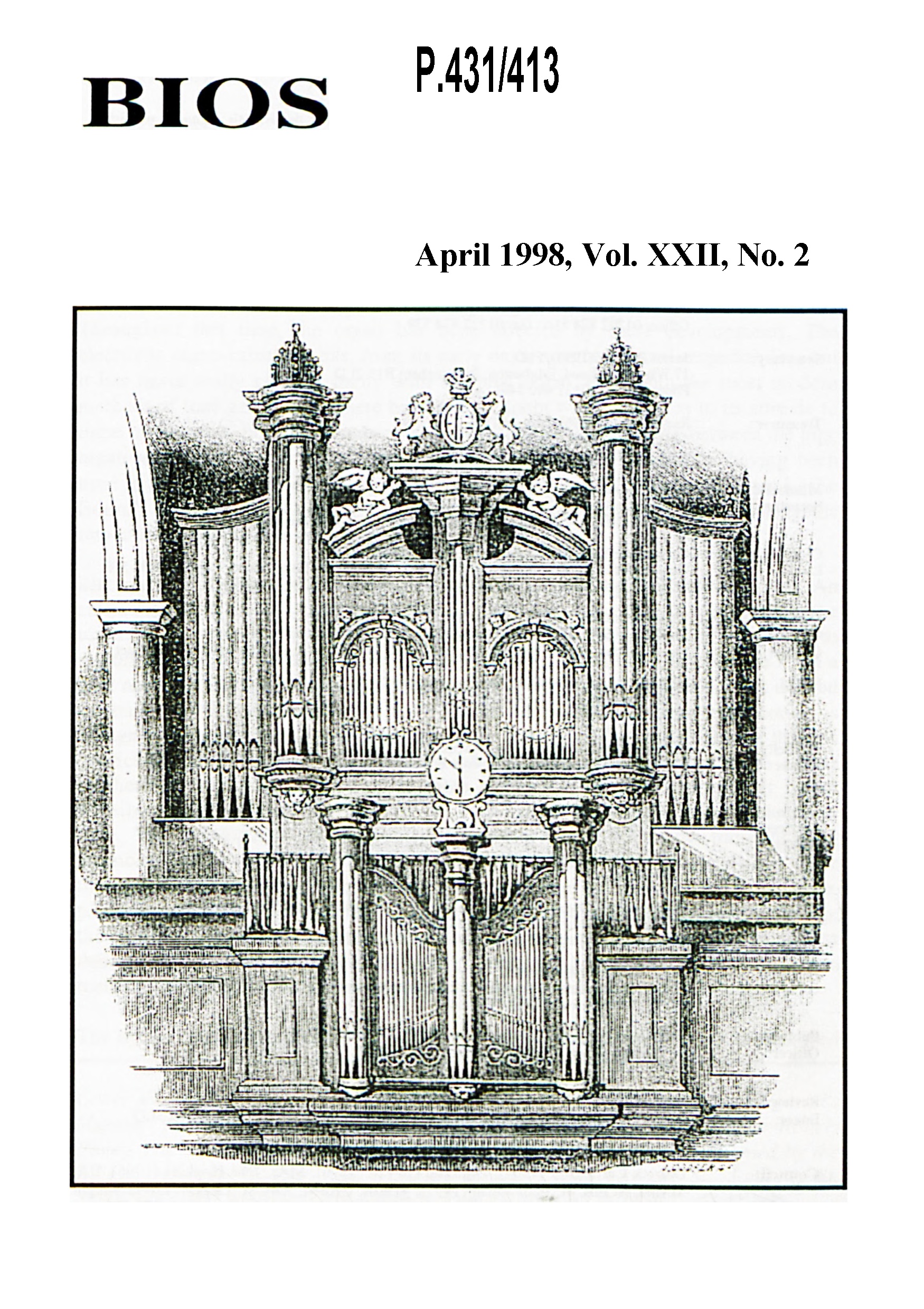
BIOS Reporter – Volume 22, No.2 – April 1998
The invention in 1904 of the thermionic valve has had far reaching consequences for the development of radio, television, and, indeed, the entire twentieth century. Its successors, the transistor in 1948, and the integrated circuit in the mid-sixties, underline the rapid pace of change and the almost explosive penetration of electronics into every facet of…
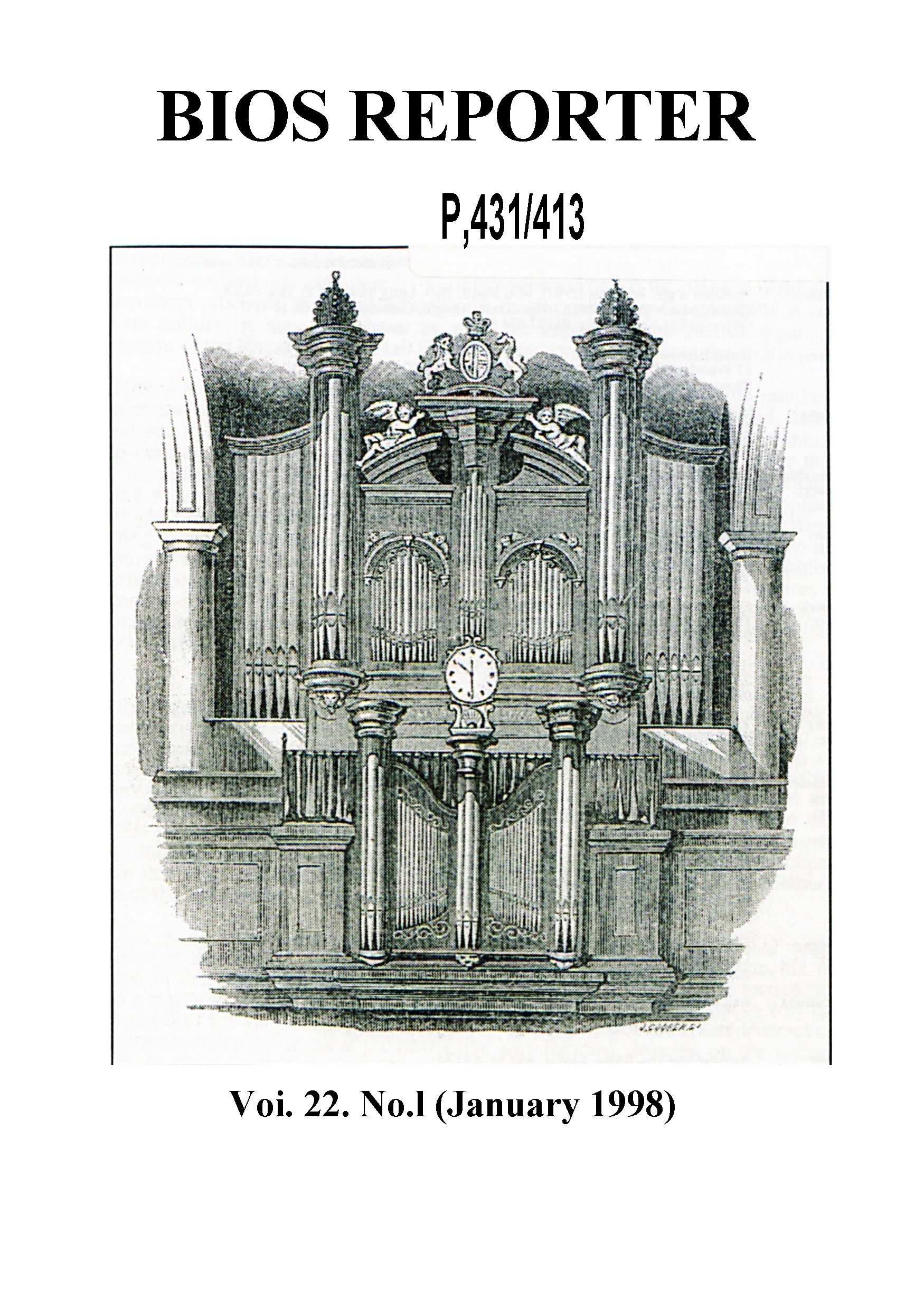
BIOS Reporter – Volume 22, No.1 – January 1998
The exercise of restoring an important organ to its original form is a daunting challenge. In the case of the Schulze organ at St. George’s Church, Doncaster, there can be no doubt of its excellence -“the noblest work of organbuilding art that England has ever heard or seen” was the enthusiastic comment by a contemporary…
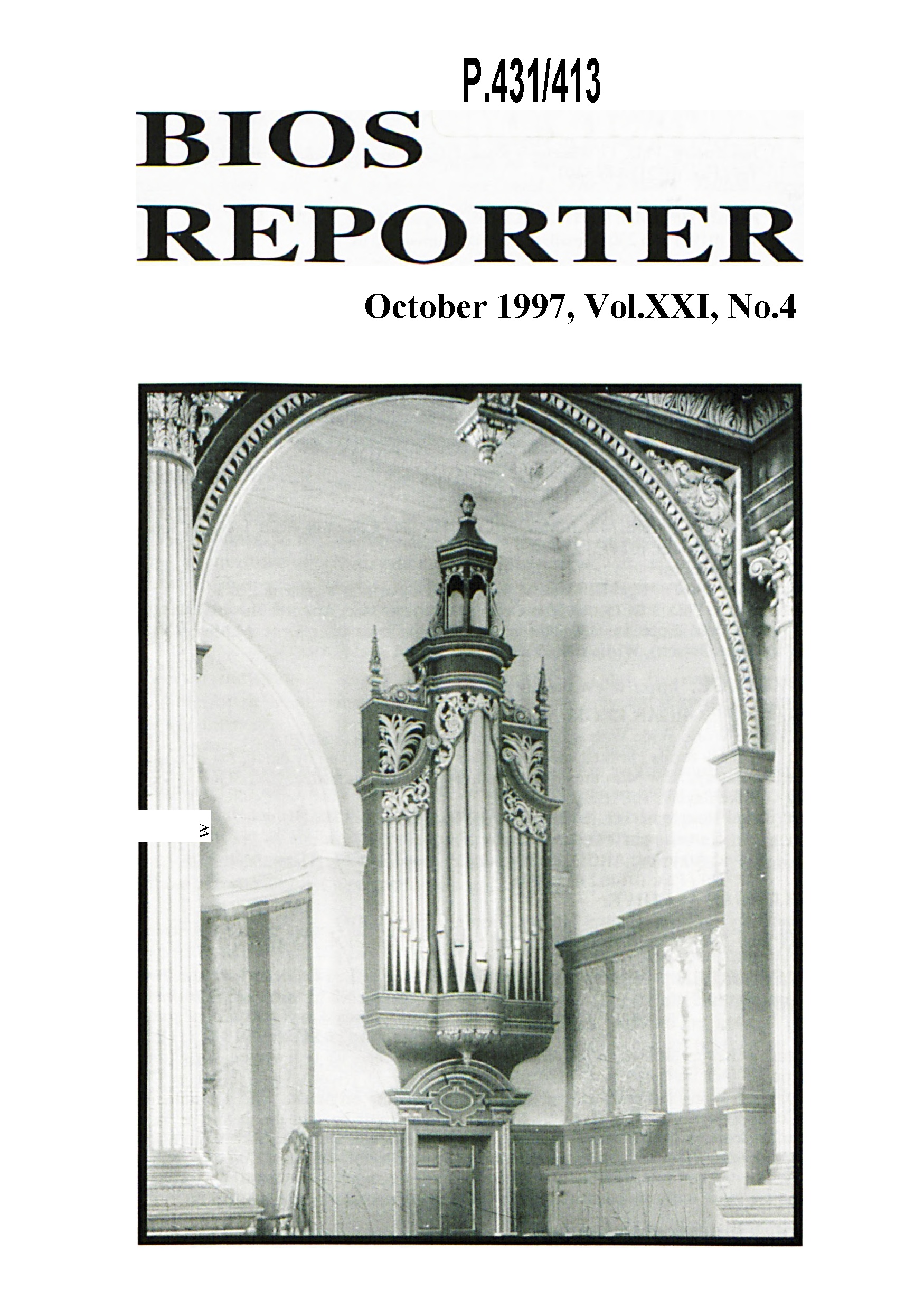
BIOS Reporter – Volume 21, No.4 – October 1997
Bernard Edmonds’ question posed in the July 1997 Reporter focuses on an important point. Given the close association between the organ and worship, and the fact that most organists play for services, what do worshippers make of organ and church music in general?…
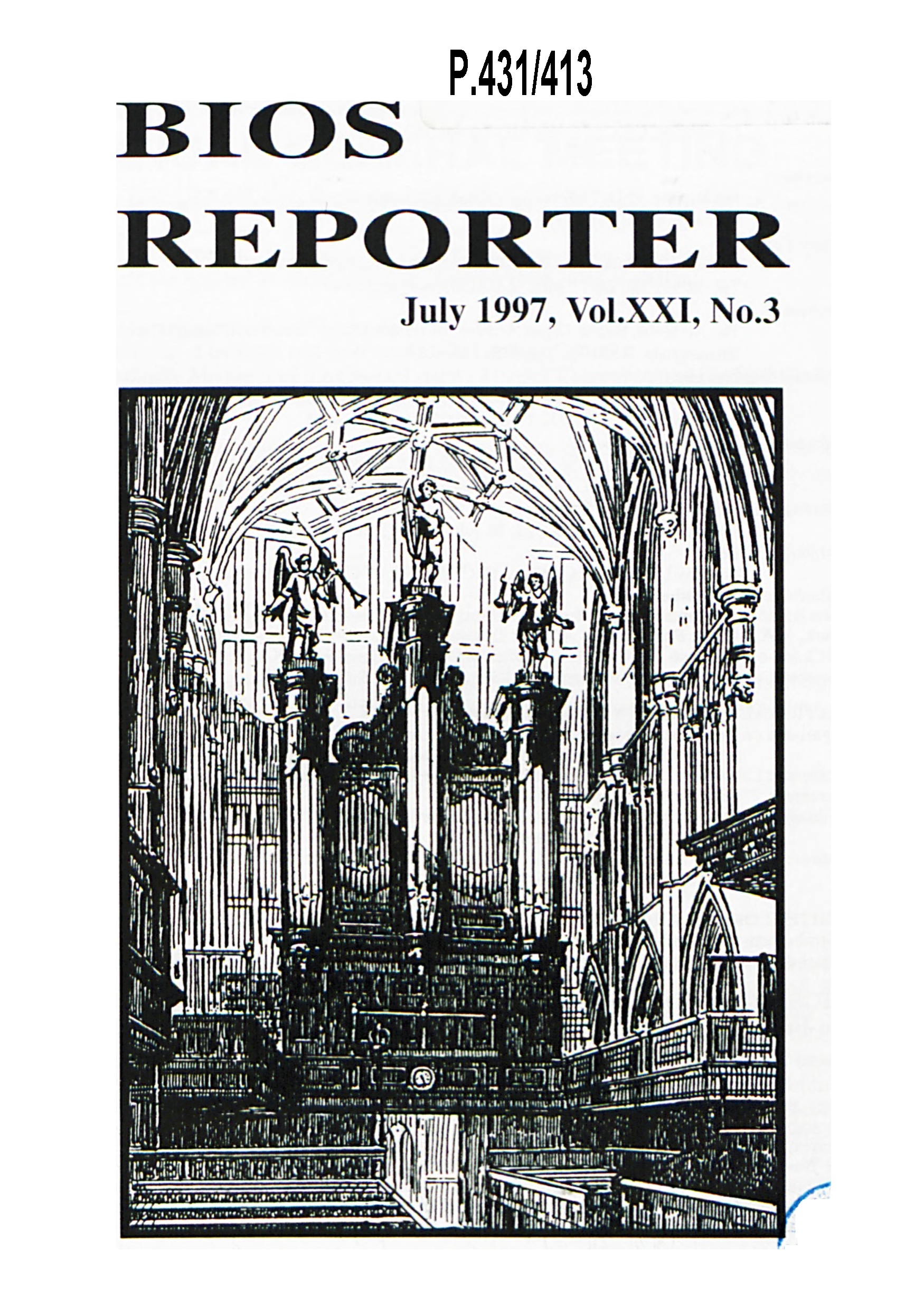
BIOS Reporter – Volume 21, No.3 – July 1997
The availability of money for the organ from the National Lottery has provided a new impetus for the repair and restoration of many ailing instruments and the construction of new, exciting designs. Some churches will not use such money on the grounds that it is derived from gambling, others have no such scruples. Where there…
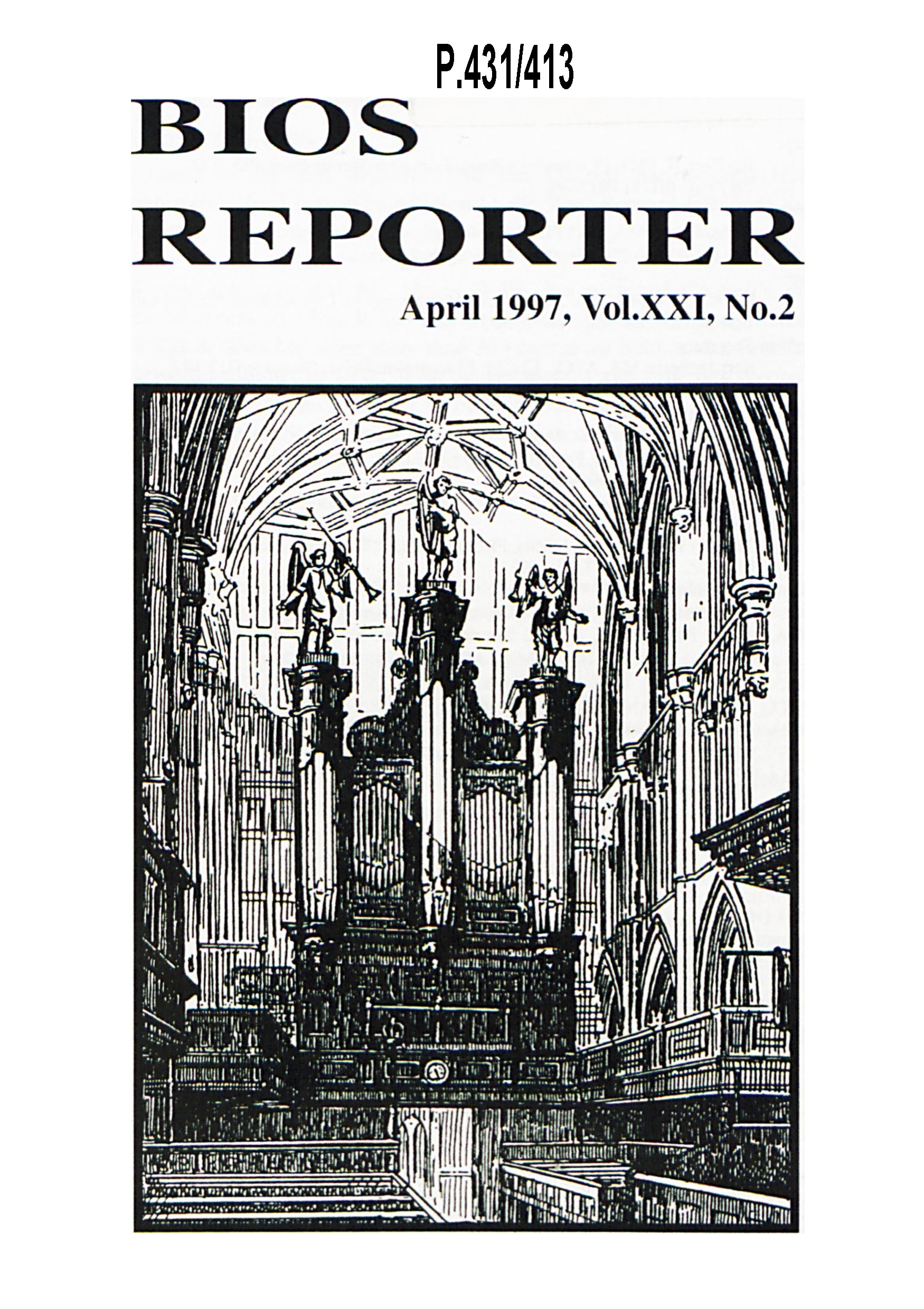
BIOS Reporter – Volume 21, No.2 – April 1997
We make no apology for returning to the perennial controversy over the responsibilities of organ design and building. Elsewhere in this Reporter we reprint an article written in 1928 by Aubrey Allen, which coincidentally but providentially illuminates the recent creation of the Institute of British Organbuilding. This new venture recognises that British organ building needs…

BIOS Reporter – Volume 21, No.1 – January 1997
It gives the Chairman great pleasure to report that the Revd. Bernard Edmonds and Frank Fowler, Esq. have accepted the Council’s offer of Honorary Membership of The British Institute of Organ Studies…
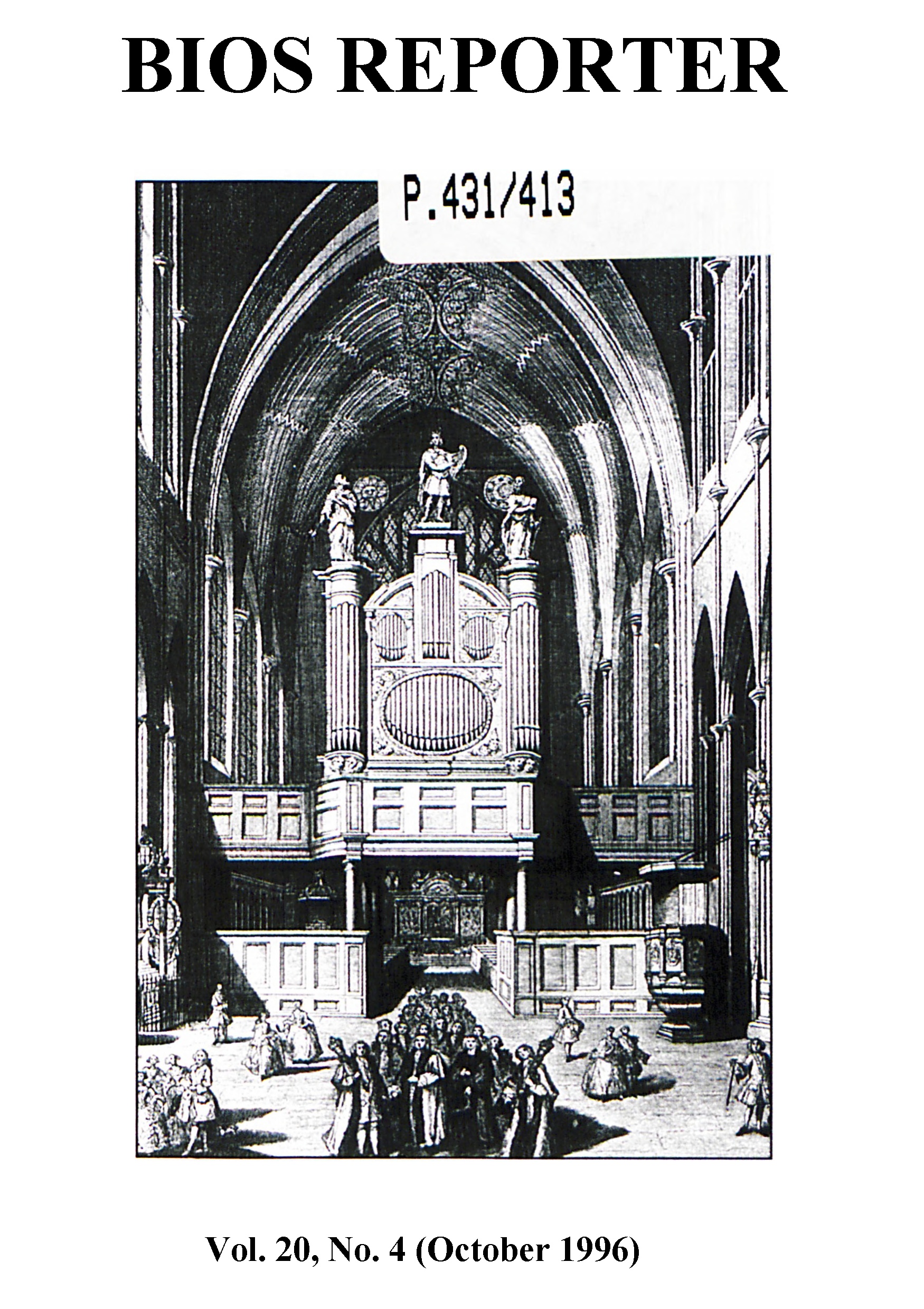
BIOS Reporter – Volume 20, No.4 – October 1996
Most of us would assume that the path taken by youngsters aspiring to be organists includes some kind of association with the Church. Young people may well have been worshippers at a local church and have been exposed to the organ as a musical instrument in the course of a service and possibly at recitals…